Strata Manager and Property Manager - what’s the difference?
Two roles, two sets of responsibilities, and one common point of confusion. Here's how to understand who does what… and who to call when something goes wrong.

If you own or rent property in South Australia, you've probably come across both a Strata Manager and a Property Manager. The titles sound similar, but the roles serve very different purposes. Understanding the distinction isn't just useful trivia - it can save you time, money, and a great deal of frustration when issues arise.
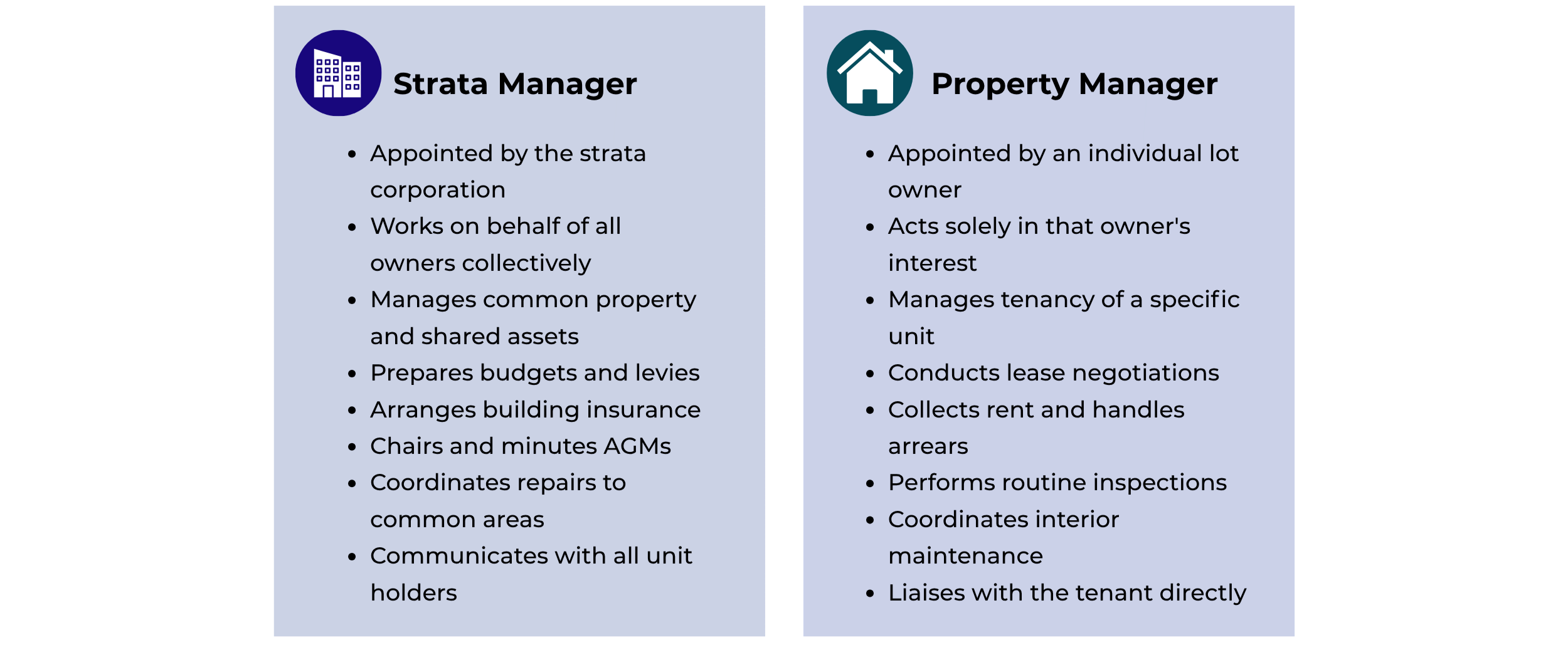
The differences between a Property Manager and a Strata Manager can be confusing, but put simply, multiple Owners contract a Strata Manager under the same corporation or strata scheme to maintain the common property and perform their duties in the best interests of all owners.
A single property owner instructs a Property Manager to manage their individual unit, performing lease negotiations, rent collection and routine inspections
The core difference at a glance:
What does a Strata Manager actually do?
A Strata Manager is engaged by the strata corporation — not by any single owner — to carry out the corporation's obligations under the Strata Titles Act 1988 (SA) or the Community Titles Act 1996 (SA), depending on when the scheme was registered.
Since 1 June 2009, no new strata plans can be registered in South Australia. New multi-lot developments now operate under the Community Titles Act 1996 (SA) — but thousands of existing strata corporations continue to be governed by the 1988 Act and work with Strata Managers every day.
A Strata Manager's duties on behalf of the corporation typically include:
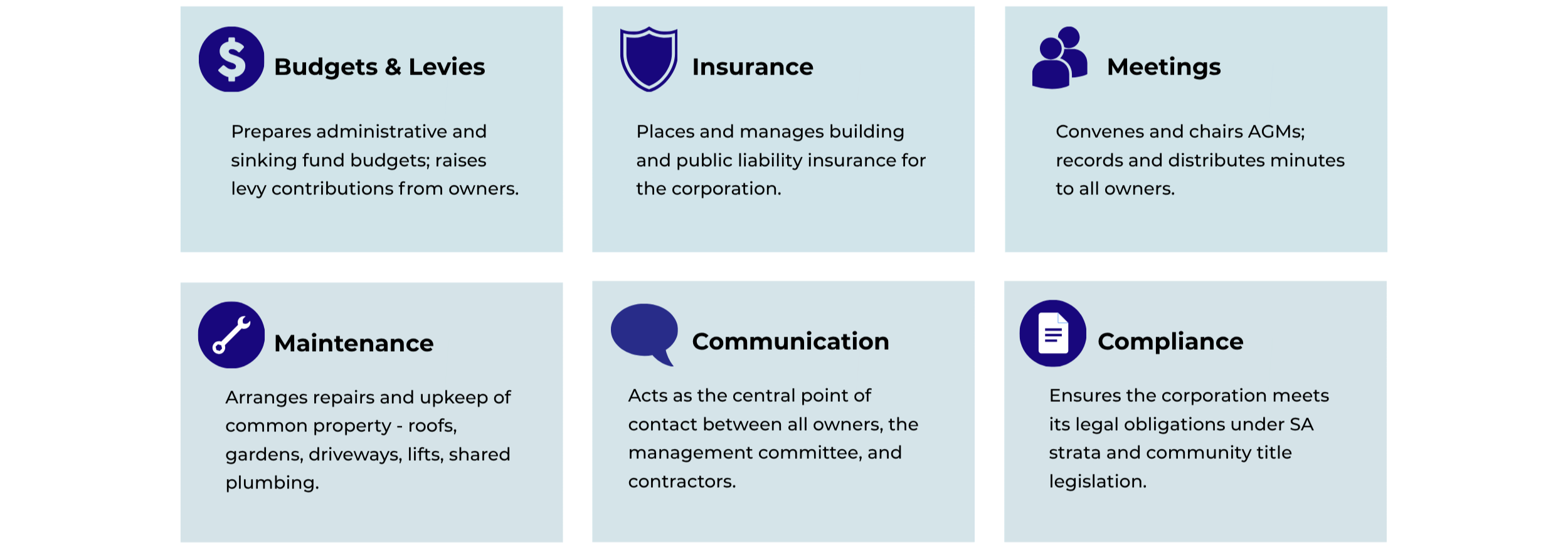
Strata groups in South Australia range from two-lot duplexes all the way up to large apartment complexes with hundreds of units. With so many owners needing clear, consistent information about the property they collectively own, effective communication and administration is central to the Strata Manager's role.
Under the Act, a Strata Manager must hold professional indemnity insurance of at least $1.5 million per claim, and has a legal duty to act in the best interests of the corporation at all times — not in the interests of any individual owner.
How the roles intersect for owners and tenants
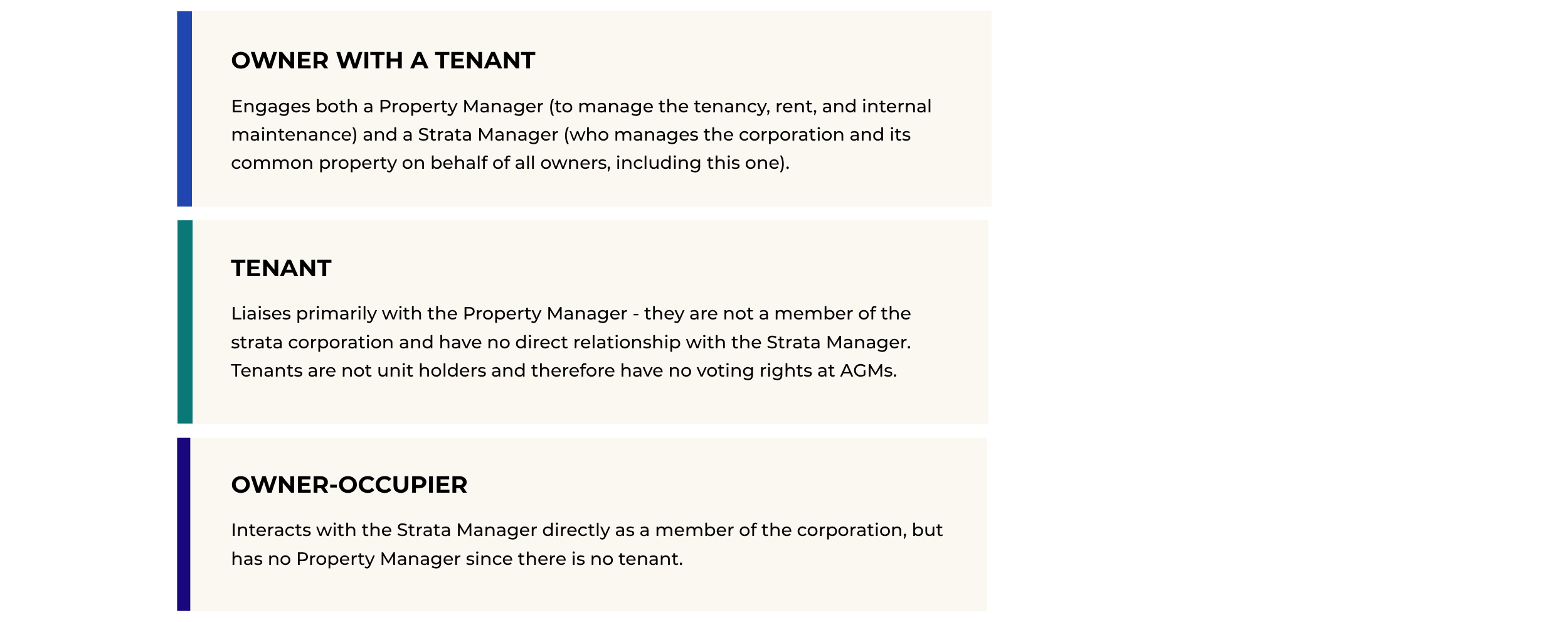
Where things get nuanced is when an owner has a tenant in their lot. In that situation, multiple parties are operating within the same property at the same time, each with a different relationship to the strata scheme.
Who do I call for maintenance and repairs?
This is one of the most common sources of confusion — and getting it right makes everyone's life easier.
Contact your Property Manager for:
Interior repairs (walls, flooring, fixtures), appliance issues, internal plumbing within the lot, yard maintenance within the individual lot boundary, and anything relating to the tenancy.
Contact your Strata Manager for:
Roof leaks, main drain plumbing and shared services, common area lighting, garden and grounds maintenance, structural building repairs, shared fences, car parks, lifts, and foyers — anything relating to common property.
Understanding this distinction means issues get resolved faster, the right contractor is engaged, and costs are correctly allocated — avoiding disputes between owners, tenants, and the corporation down the line.
South Australia's legislative context
Whether your property falls under the Strata Titles Act 1988 (SA) or the Community Titles Act 1996 (SA) affects some administrative details — including whether the shared rules are called "articles" (strata) or "by-laws" (community title), and how boundaries are legally defined — but the day-to-day role of the Strata Manager remains largely consistent across both frameworks.
Community title schemes are now the standard for any new multi-lot development registered after 1 June 2009. Existing strata corporations can vote to convert to community title status, but are not required to do so. At Horner Management, our team is experienced across both legislative frameworks and can guide owners through the practical and legal differences as they apply to their specific scheme.
This article is intended as general information only and does not constitute legal advice. For specific guidance on your scheme's obligations, contact a licensed strata manager or legal adviser.